Past Conference Report - Cancer Research


With great support from our Collaborators and Organizing Committee, PULSUS Conferences successfully completed the “Cancer 2018” which was held at Edinburgh, Scotland on March 26-27, 2018.

We would like to thank our Keynote Speakers for the conference - Hiroshi Kobayashi, Chiba University, Japan, William T. Beck, University of Illinois, USA, Shalini Gupta, King George Medical College, India, Antonio Gomez-Munoz, University Of The Basque Country, Spain, Barbara DeVivo, Westmont University, USA. for their support in making this event a great success.

We would like to extend our thanks to our collaborators “Sudanese Medical Research Association”, “Uganda Cancer Society” and “Pharmaceutical Society of Uganda” for their constant support. It wouldn’t have been possible without the support of our Media Partners who helped us in promoting this event. We thank our Media partners for their support in helping us reach a greater audience.

We also would like to thank all our Speakers, Poster Presenters and Delegates for taking out your time and sharing their research work with our peer network. We are very glad to have shared a great relationship with all these Attendees, associations and we hope to see even greater support in our upcoming events.

With a great response and feedback which we received at this event, Pulsus Conferences is proud to announce our upcoming conferences in the Series of Oncology Conferences-

25th Global Meet on Cancer Research & Oncology”- Rome, Italy on May 20-21, 2019.

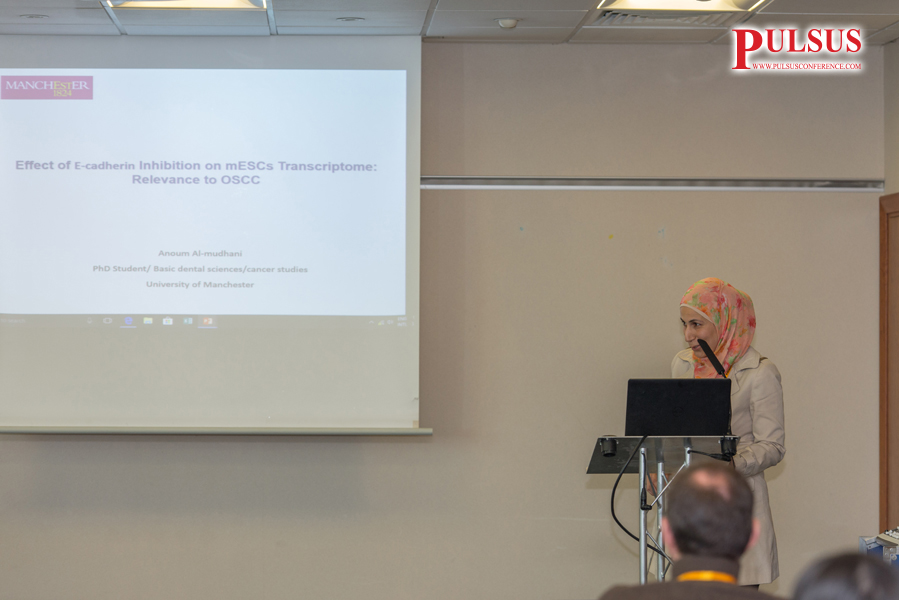
Past conference photos: 


Comments

Popular posts from this blog

Poster Presentation - Influence of NECC (Nutrition and Exercise Center for Cancer Patients) on survival and body composition in Gastrointestinal Cancer Patients

Abstract BACKGROUND : Gastrointestinal cancer patients are particularly predisposed to develop cancer cachexia. Cachectic patients are characterized by loss of adipose tissue as well as skeletal muscle wasting which has a tremendous impact on quality of life and survival (1, 4). In terms of improvement for this multifactorial syndrome, Klinikum rechts der Isar (MRI) in Munich, Germany has founded NECC, a treatment concept including nutrition intervention and an individual training program. METHODS : In this study we focused on patients with pancreatic (n =15) and upper gastrointestinal cancer (n = 21). Body composition using CT images was analyzed initially, 4 weeks, 3 months and 6 months after initial visit of NECC (Image 1). To underline the outcome, NECC patients were matched to adequate partners who correspond in age, gender, diagnosis with TNM classification and type of surgery. The control group does not receive any further support concerning nutrition and physical exercise...

Poster Presentation - The Immunogradient of CD8+ cell density in the tumour-stroma interface zone predicts overall survival of patients with hormone receptor-positive invasive ductal breast carcinoma

Abstract Statement of the Problem: Tumour-infiltrating lymphocytes (TIL) are associated with better prognosis in triple-negative and HER2-positive breast cancer (1, 2), and TIL assessment by digital image analysis (DIA) has been successfully implemented in colorectal and other cancers (3). However, results in hormone receptor-positive breast cancer (HRBC) based on manual scoring remain contradictory (2). Here we used an automated DIA method to extract the prognostic value of novel Immunogradient indicators in CD8+ cell density profiles in HRBC. Methodology & Theoretical Orientation: Surgically excised HRBC samples from 102 patients were immunohistochemically stained for CD8, digitized and analyzed by the HALO™ platform. The DIA data were subsampled by a hexagonal grid and explicit rules were then used to extract the tumor-stroma interface zone (IZ) and compute novel Immunogradient indicators from TIL density profiles across the IZ. The prognostic value was evaluated by sur...